


Voters are starting to ask AI who's on their ballot instead of searching for it. About 49% of all American adults use AI chatbots in some capacity (Pew Research), and 51% of Gen Z already use it daily or weekly (Gallup). When an AI answer leaves a candidate out, or gets them wrong, most voters never see a correction.
Down-ballot candidates are the most exposed: they have the thinnest footprint online, so AI has the least to draw from. We wanted to know whether a campaign can change that with content it controls.
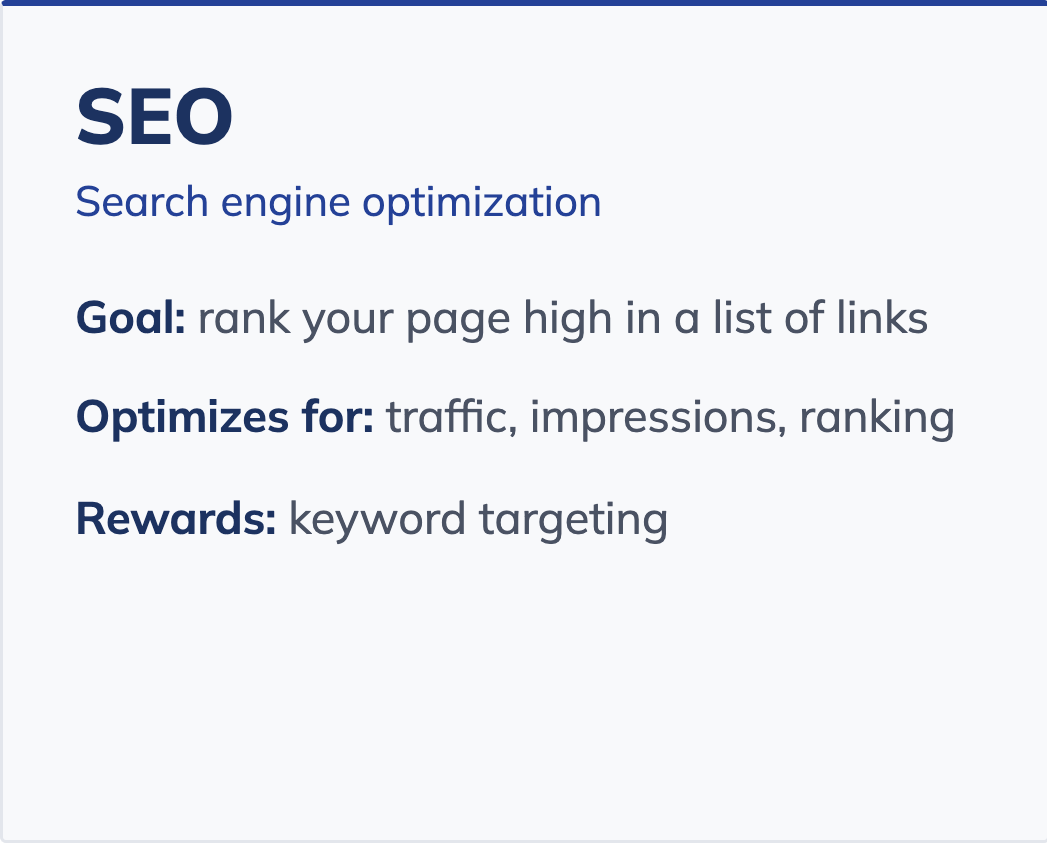
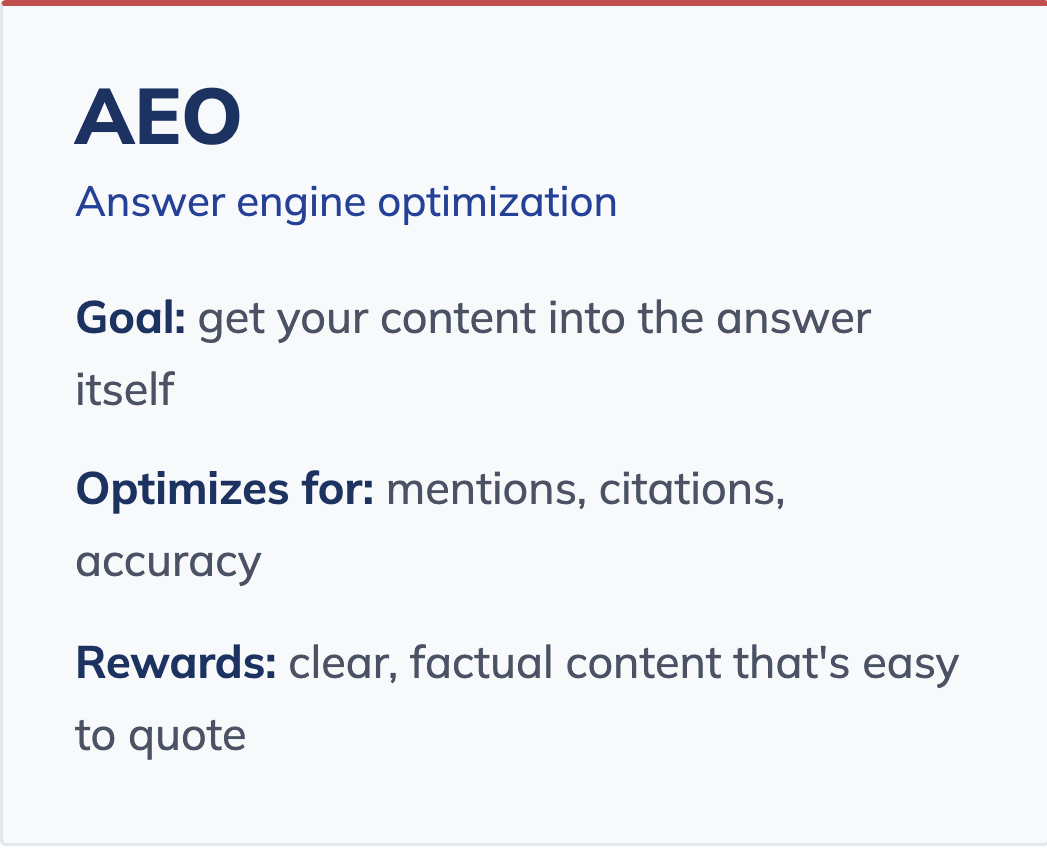
AEO IS
Clear, well-sourced facts that AI can trust
AEO IS NOT
Gaming the model, keyword stuffing, or spam
Publishing structured, question-driven content will get candidates mentioned and cited more often in AI answers.
Each campaign published one format first, then switched to the other, so we could separate the effect of the format from the effect of the candidate. Every district got its own bank of prompts built from questions its voters actually ask.
We read results weekly by topic and by engine, against a May baseline.
Specific questions with direct answers, like "What is the candidate's position on affordable housing?"
A long-form piece on one topic, like "The candidate's plan to make housing more affordable."
Share of voice: how often AI mentions the candidate at all
Citation share: how often AI cites the pages we published
4 congressional, 4 state Senate
Pennsylvania
May - Aug '26
ChatGPT, Gemini, Perplexity
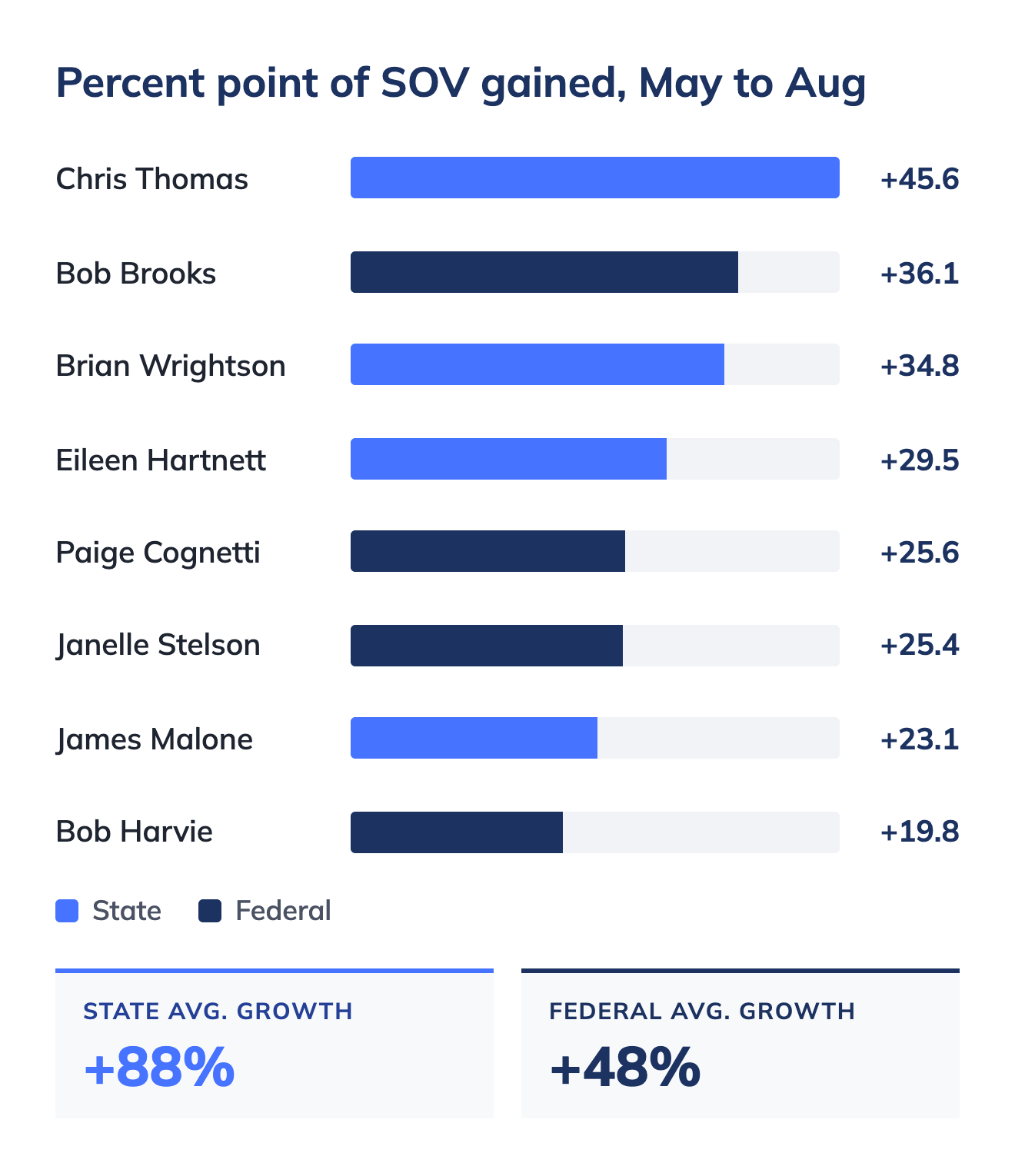
State candidates grew their share of voice nearly twice as much as federal candidates because they started with lower AI visibility and published directly on their official sites.
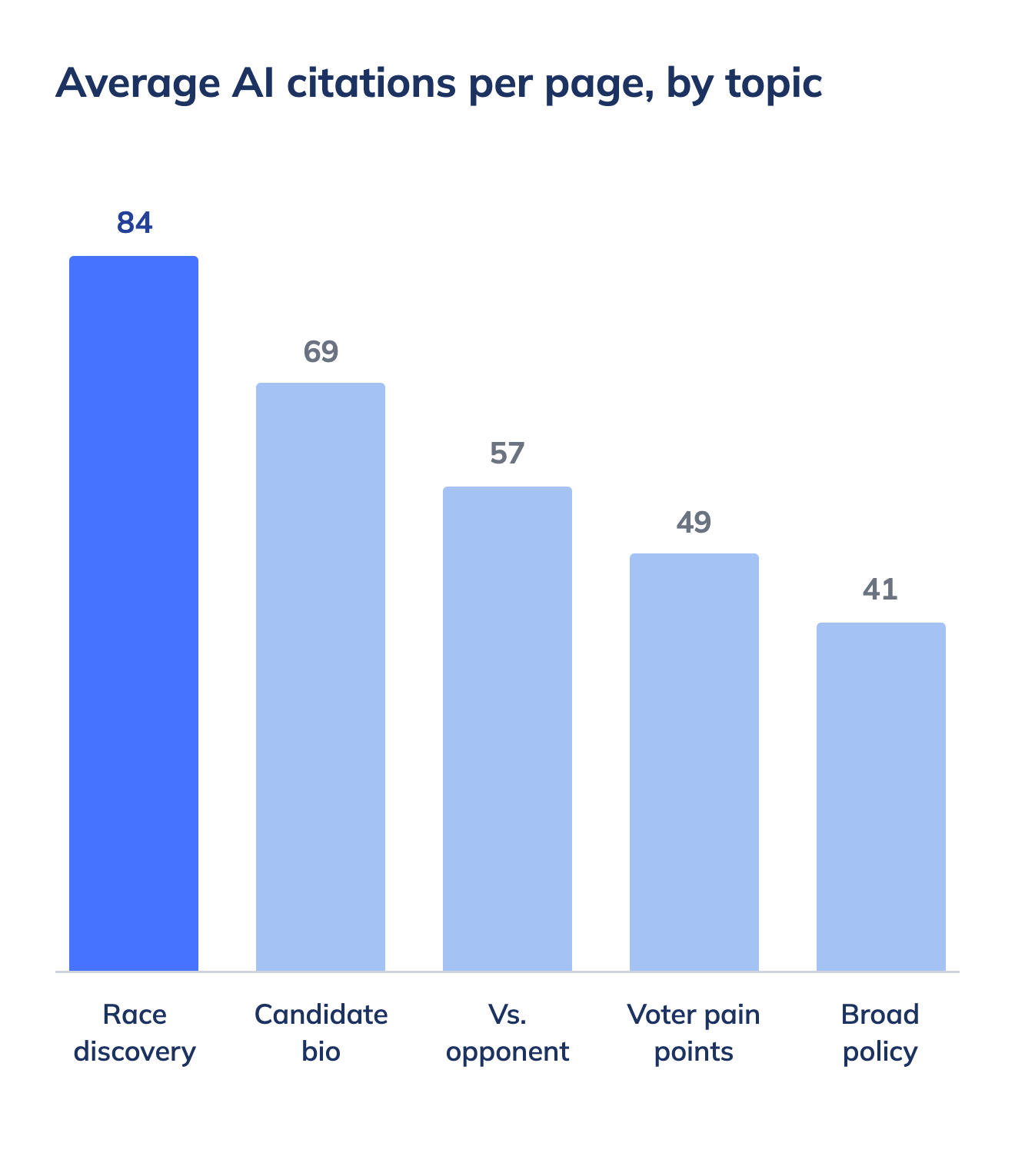
"Who is running for Congress in my district?" beat broad policy questions two to one.
Publish on the official campaign site
AI engines increasingly favor owned, authoritative sources. Your campaign domain is the one you control.
Start with the basics voters ask
Who's running, who the candidate is, and how they compare to the opponent earned the most citations.
Optimize for the question, not the template
Pick the topic first, then choose an article or FAQ based on what best answers it.
Track each engine separately
ChatGPT, Gemini, and Perplexity are moving in different directions. What works on one may not hold on another.
.svg)


